

How Alignment Affects Tire Wear, Fuel Usage, Steering & Professional Alignment Solutions
In Part 1, we covered the common causes of wheel alignment problems, including potholes, curb hits, worn suspension parts, minor collisions, and everyday road wear. In this second part, we’ll look at what happens when those alignment issues are ignored.
Poor wheel alignment might seem like a minor inconvenience at first. Maybe your steering wheel sits slightly off-center, or your vehicle drifts a little on straight roads. But over time, alignment problems can affect your tires, fuel usage, steering response, ride comfort, and overall vehicle safety.
The important thing to understand is this: alignment is not only about straightening the steering wheel. It affects how your tires contact the road, how much resistance your vehicle creates while moving, and how stable your car feels during everyday driving.
How Wheel Alignment Affects Tire Wear
Your tires are designed to sit on the road at very specific angles. When your alignment is correct, the tread should wear evenly across the tire surface. When alignment is off, certain sections of the tire may carry more pressure than others.
That uneven pressure can cause premature tire wear.
Common Tire Wear Patterns Linked to Alignment Issues
1. Inner Edge Wear
If the inside edge of the tire wears faster than the rest, it might point to excessive negative camber or toe problems.
This can happen when the tire leans inward too much or points slightly in the wrong direction while driving.
2. Outer Edge Wear
Outer edge wear can suggest the opposite problem. The tire might be leaning outward or under stress due to improper steering geometry.
This type of wear can also occur when tire pressure is too low, so pressure should always be checked before assuming alignment is the only cause.
3. Feathering
Feathering happens when tread blocks feel smooth in one direction and rough in the other.
This often suggests a toe alignment issue, in which the tires are slightly dragged across the road rather than rolling cleanly.
4. Cupping or Scalloping
Cupping can appear as uneven dips around the tire tread. This might be linked to worn suspension parts, poor wheel balance, or alignment-related instability.
Why Uneven Tire Wear Matters
Uneven tire wear can reduce:
- Road grip
- Braking performance
- Wet-weather traction
- Tire lifespan
- Ride comfort
The financial impact can also be significant. Tires are not cheap, and poor alignment can shorten their usable life. In some cases, a relatively simple alignment check might help prevent premature tire replacement.
How Alignment Can Affect Fuel Usage
Poor alignment can also affect fuel efficiency.
When wheels are properly aligned, they roll smoothly in the direction the vehicle is traveling. When alignment is off, the tires may create extra drag as they slightly resist the direction of travel.
This increases rolling resistance.
What Rolling Resistance Means
Rolling resistance is the force your vehicle must overcome to keep moving. If your tires are not aligned correctly, your engine may need to work harder to maintain speed.
That extra effort can increase fuel usage.
Signs Alignment Might Be Affecting Fuel Economy
You might notice:
- More frequent fuel stops
- Reduced miles per gallon
- The vehicle feels heavier or less responsive.
- Tires appear to wear quickly.
- The car pulls or wanders while driving.
Fuel economy can be affected by many factors, including tire pressure, driving habits, engine condition, and road conditions. But poor alignment can be a contributing factor.
Why It Adds Up Over Time
A small drop in fuel efficiency may not feel dramatic in one week. But over months of daily driving, the extra fuel usage can add up.
That is why alignment is often viewed as preventive maintenance rather than just a repair.
How Alignment Affects Steering and Handling
Steering problems are one of the most noticeable signs of poor alignment.
When alignment is correct, your vehicle should feel stable, predictable, and easy to control. When alignment is off, you might feel like you are constantly having to correct the steering wheel.
Common Steering Symptoms
1. Vehicle Pulling to One Side
If your car consistently pulls left or right, alignment might be involved.
However, tire pressure, tire wear, brake drag, or suspension damage can also contribute. That is why a full inspection is often a good option.
2. Crooked Steering Wheel
If your vehicle drives straight but the steering wheel sits off-center, the toe alignment may be incorrect.
This is one of the most common signs drivers ignore.
3. Wandering at Highway Speeds
A vehicle that feels unstable or wanders at higher speeds might have alignment, tire, or suspension issues.
This can become tiring because the driver must constantly make small steering corrections.
4. Delayed or Loose Steering Feel
Alignment problems can sometimes make steering feel less responsive. If steering feels loose, heavy, or delayed, it may also indicate worn steering or suspension components.
Why Steering Issues Should Not Be Ignored
Poor steering response can affect your ability to react quickly, especially during:
- Sudden braking
- Lane changes
- Wet road conditions
- Emergency maneuvers
- Highway driving
Even if the vehicle still feels drivable, changes in steering behavior should be taken seriously.
Why Alignment Problems Can Get Worse Over Time
Alignment problems usually do not fix themselves.
If the tires are wearing unevenly, the problem can continue to compound. Uneven tires can then create additional vibration, road noise, and handling problems.
The Typical Chain Reaction
A small alignment issue can lead to:
- Uneven tire wear
- Reduced traction
- Steering correction habits
- Added suspension stress
- Increased fuel usage
- More expensive repairs later
This is why early diagnosis can be useful. Addressing an alignment issue early might help prevent additional damage to tires and suspension parts.
Professional Alignment Solutions Explained
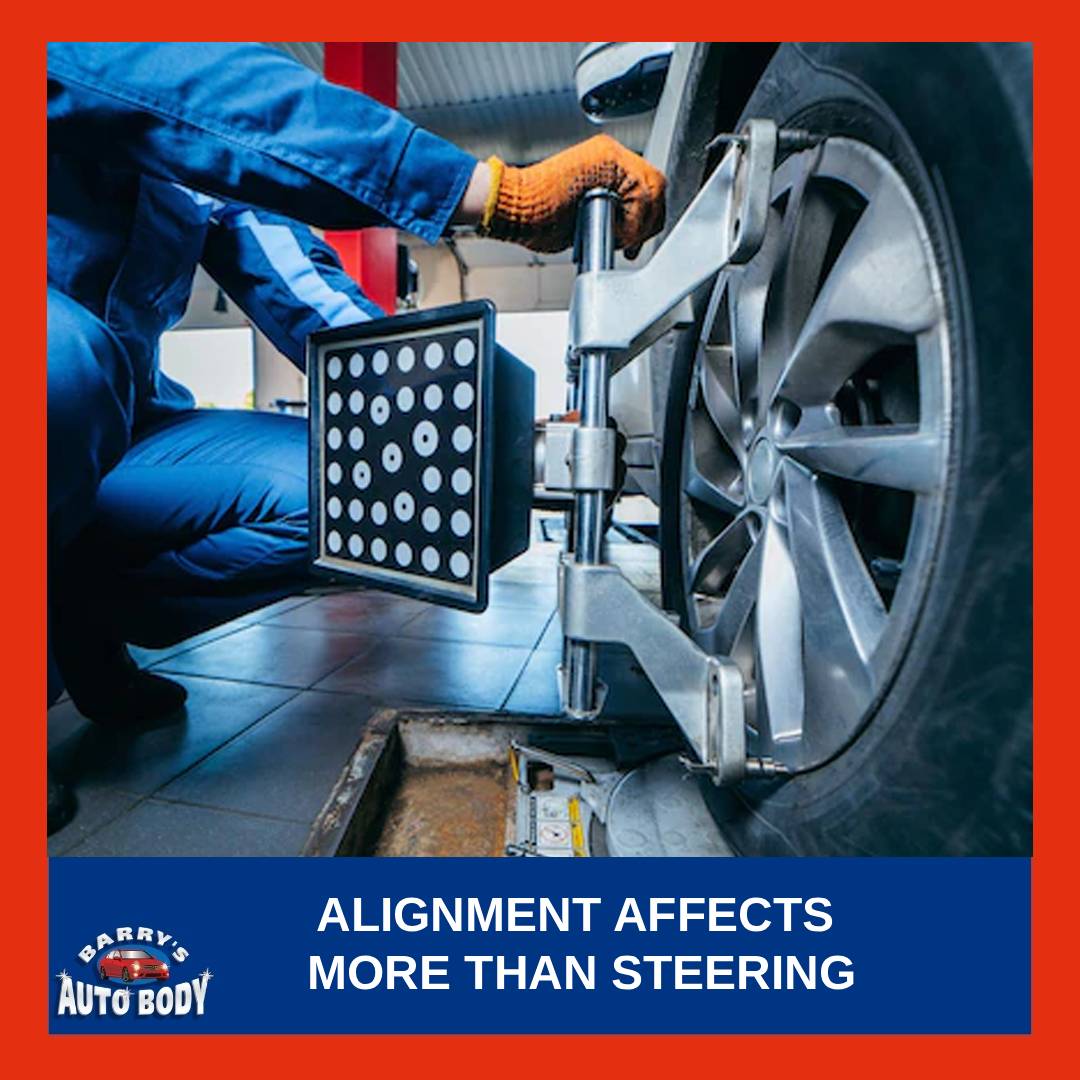
A professional alignment is more precise than a visual check. Modern alignment equipment measures wheel angles in very small increments and compares them to manufacturer specifications.
What a Professional Alignment Usually Checks
A proper alignment service may include:
- Camber angle
- Caster angle
- Toe angle
- Steering wheel position
- Tire condition
- Suspension condition
- Steering component condition
If suspension parts are worn or damaged, alignment adjustments may not hold properly. In that case, repairs might be recommended before alignment is completed.
Types of Wheel Alignment
1. Front-End Alignment
This focuses only on the front wheels.
It may be suitable for some older vehicles, but many modern vehicles benefit from a more complete alignment check.
2. Four-Wheel Alignment
A four-wheel alignment checks and adjusts all four wheels, where applicable.
This is often a better option for modern vehicles because rear wheel angles can also affect handling, tire wear, and steering stability.
3. Thrust Alignment
This checks whether the rear wheels are properly aligned with the front wheels.
If the thrust angle is off, the vehicle might feel like it is moving slightly sideways or require constant steering correction.
When Professional Alignment May Not Be Enough
Sometimes, alignment equipment can identify a deeper problem.
If a technician cannot bring the vehicle into alignment, it might suggest damaged or worn parts.
Possible Underlying Issues
- Bent control arms
- Worn tie rods
- Damaged ball joints
- Weak bushings
- Bent wheels
- Frame or structural damage after collision
- Worn shocks or struts
In these cases, simply adjusting the alignment may not solve the issue. The underlying part may need to be repaired or replaced first.
How Often Should Wheel Alignment Be Checked?
There is no single rule for every vehicle, but an alignment check might be a good option:
- After hitting a pothole
- After striking a curb
- After replacing tires
- After suspension repairs
- After a collision
- If the steering wheel is off-center
- If tires show uneven wear
- If the car pulls or wanders
Some drivers include alignment checks as part of regular or preventive maintenance, especially if they often drive on rough roads.
How Barry’s Auto Body Can Help
Barry’s Auto Body can inspect alignment-related concerns as part of a broader steering, suspension, and tire evaluation.
A professional inspection may include:
- Checking tire wear patterns
- Inspecting suspension components
- Evaluating steering response
- Looking for impact-related damage
- Confirming whether alignment adjustment is appropriate
This matters because the visible symptom, such as drifting or uneven tire wear, might not always be the root problem. A proper inspection can help identify whether the issue is simple alignment drift, worn suspension, brake drag, or hidden impact damage.
Wheel alignment affects more than steering. It can influence tire life, fuel usage, ride comfort, and overall handling.
If your vehicle pulls to one side, your steering wheel is off-center, or your tires are wearing unevenly, it may be worth scheduling an alignment inspection. Catching the issue early can help reduce tire damage, improve driving comfort, and prevent small problems from becoming more expensive repairs.
For drivers who already read Part 1, the message is simple: potholes, curb hits, and worn suspension can cause alignment problems. Part 2 shows why those problems should not be ignored.