


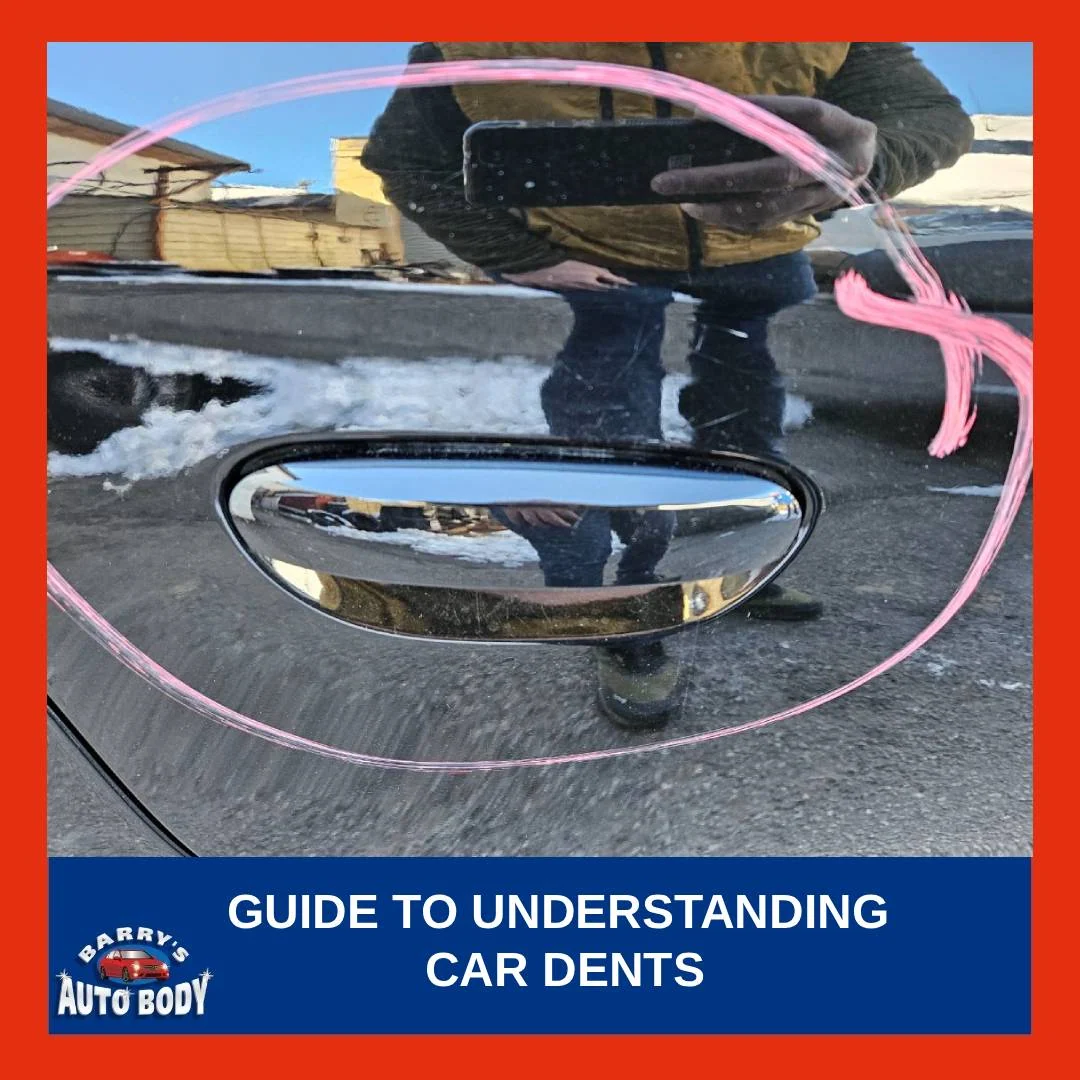
Understanding the Different Types of Car Dents and What Causes Them
Car dents are one of the most common forms of vehicle damage—and one of the most misunderstood. A small dent on a door might look harmless, while a larger dent on a fender can seem alarming. In reality, not all dents are the same, and the type of dent often matters more than its size.
This first part of a two-part guide focuses on what car dents are, how they form, the different types you might encounter, and why some dents are easier to fix than others. Part 2 will cover repair methods; when paintless dent repair (PDR) can work, when panel beating might be required, and how to choose the right approach.
Why All Car Dents Are Not the Same
It’s easy to think of dents as purely cosmetic. However, the shape, depth, location, and cause of a dent can influence:
- Repair complexity
- Cost and time involved
- Whether paint is affected
- Which repair method may be suitable
Two dents that look similar from a distance can behave very differently once examined closely. Understanding dent types helps set realistic expectations and prevents unnecessary trial-and-error repairs.
How Car Panels Are Designed to React to Impact
Modern vehicles use thin, high-strength metal panels designed to flex under impact rather than crack. This improves safety and reduces weight, but it also means panels can dent more easily.
Key design factors include:
- Panel thickness varies by location
- Curves and body lines add strength but complicate repairs
- Energy transfer spreads impact beyond the contact point
Because panels flex, the angle and speed of impact often matter as much as force. This explains why a slow parking-lot tap can leave a visible dent, while a harder impact elsewhere might not.
What Actually Causes Car Dents
Car dents typically fall into a few broad cause categories:
- Environmental factors (hail, falling debris)
- Human activity (doors, trolleys, careless parking)
- Vehicle-to-vehicle contact (low-speed impacts)
- Road conditions (stones, uneven surfaces)
In many cases, dents form not from a single strong blow, but from repeated low-energy impacts over time.
Hail Damage Dents
Hail damage is one of the most recognizable dent types and one of the most deceptive.
Typical characteristics:
- Multiple small, shallow dents
- Often spread across the roof, bonnet, and boot
- Paint is frequently not broken
Hailstones strike from above, creating uniform depressions rather than sharp impacts. Because paint often remains intact, hail damage may look minor at first glance.
However, widespread hail dents can affect:
- Resale value
- Panel alignment
- Long-term paint integrity
Left unaddressed, dirt and moisture may settle into the depressions, potentially accelerating wear.
Parking Lot Dents (Door Dings & Low-Impact Hits)
Parking lots are one of the most common places for dents to occur.
Common causes include:
- Car doors opening into adjacent vehicles
- Shopping trolleys rolling into panels
- Low-speed bumper contact
Typical features:
- Small, round or oval dents
- Often found on doors, fenders, or quarter panels
- Paint may or may not be damaged
Location plays a big role here. A dent near the edge of a door or close to a body line can be more challenging than one on a flat panel, even if they’re the same size.
Crease Dents
Crease dents are among the more complex dent types.
What defines a crease dent:
- A long, narrow indentation rather than a round depression
- Often caused by sharp or focused impacts
Common causes include:
- Door edges
- Poles or narrow objects
- Sliding contact along a panel
Creases stretch the metal more than round dents, which can limit how much the panel can be reshaped. The sharper and longer the crease, the more complex the repair may become.
Body Line and Edge Dents
Modern vehicles use subtle body lines, ridges, or curves that add strength and visual style.
Why body line dents are different:
- The metal is stiffer along these lines
- Precision is required to restore shape
- Small errors are more noticeable
Edge dents (near door edges or panel seams) also pose challenges due to limited access behind the panel. These dents often require more skill to correct cleanly.
Large Impact Dents vs Minor Dents
Dent size alone doesn’t tell the whole story.
- A large, shallow dent may be easier to correct than a
- Small, deep dent that stretches metal or damages paint
Larger dents may also indicate:
- Underlying structural contact
- Mounting point stress
- Hidden panel distortion
This is why professional assessment is sometimes recommended, especially if the dent resulted from a vehicle-to-vehicle impact.
Paint Damage and Dents
Paint condition plays a major role in determining repair options.
Key considerations:
- Intact paint often allows more repair flexibility
- Cracked or chipped paint limits non-invasive options
- Deeper dents increase the risk of paint failure
It’s important to note that paint damage isn’t always immediately visible. Fine cracks may appear later due to temperature changes or metal movement.
Secondary Damage Associated With Dents
Dents don’t always occur in isolation.
Possible secondary issues include:
- Trim or moulding displacement
- Sensor or camera interference (especially near bumpers)
- Panel alignment changes
- Water ingress if seals are affected
Dents near modern safety or parking systems often warrant closer inspection to ensure everything remains properly aligned.
Why Some Dents Get Worse Over Time
A seemingly stable dent can sometimes change.
Contributing factors may include:
- Metal memory causing tension to shift
- Temperature fluctuations expanding and contracting metal
- Moisture and debris settling into the dent
Delaying repair doesn’t always make things worse, but in some cases it can reduce the range of available options.
Common Myths About Car Dents
There are several persistent misconceptions about dents:
- “Small dents don’t matter.”
Small dents can still affect paint and value. - “All dents can be popped out easily.”
Access, metal stretch, and paint condition matter. - “DIY dent kits work for everything.”
Some kits may help with minor dents, but results vary. - “If paint isn’t damaged, it’s not serious.”
Structural or panel stress can still exist.
Understanding these myths helps set realistic expectations.
What Drivers Can Do Immediately After Discovering a Dent
Before attempting any repair, a few careful steps can help.
Recommended actions:
- Take clear photos from multiple angles
- Check for paint cracking or sharp edges
- Note the dent’s location relative to body lines or sensors
- Avoid pressing or pulling the dent without assessment
- Monitor the area for changes over time
Understanding the type of dent is often the most important first step.
What Part 2 Will Cover: How Dents Are Repaired
This article focused on what dents are and how they happen. In Part 2, we’ll explore:
- When Paintless Dent Repair (PDR) may be suitable
- When panel beating and refinishing might be required
- How paint condition influences repair choice
- Factors that help determine the most appropriate method
The right repair approach depends on the dent type, location, and paint condition.
Car dents may look simple, but physics, materials, and design shape them. By understanding the different dent types and their causes, drivers are better prepared to choose appropriate next steps and avoid unnecessary repairs.
Part 2 completes the guide, helping you understand how to repair these dents and when each method makes sense.